2025 Annual Booklet
October 12, 2026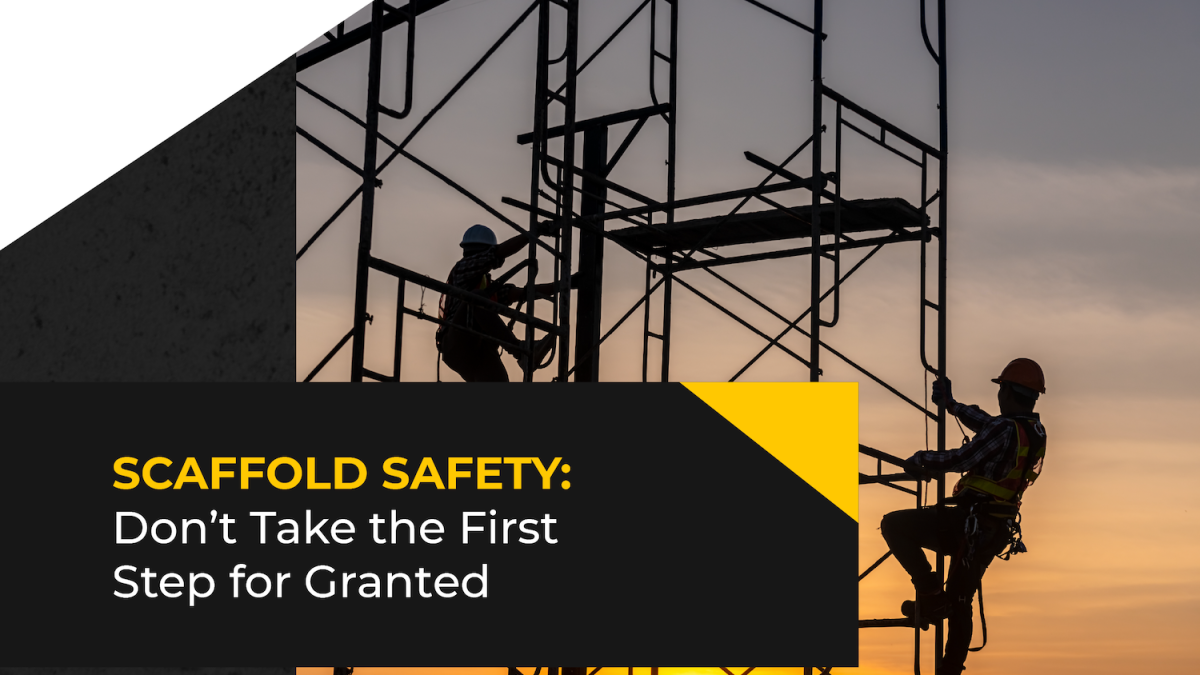
Scaffolds are a common part of construction work, but improper setup, use or maintenance can lead to serious injuries. Scaffolding hazards contribute to thousands of injuries each year and remain a significant cause of fatal falls in construction.
Many scaffold incidents occur when planking or supports fail, workers slip or fall without proper protection or objects fall from elevated platforms.
Taking a few minutes to inspect the scaffold, confirm fall protection and identify potential hazards before climbing can help prevent serious injuries and save lives.
Before You Climb
Before using a scaffold, make sure it has been erected and inspected properly. It should be level, stable, properly braced and securely supported. Platforms should be fully planked, free of debris and equipped with required guardrails, midrails and safe access.
Never use a scaffold that appears damaged, unstable or incomplete.
Use the Scaffold as Intended
Once work begins, safe habits matter. Workers should:
- Maintain three points of contact when climbing.
- Keep both feet on the platform.
- Never climb guardrails or cross braces.
- Keep platforms clean and organized.
- Stay within the scaffold’s rated load capacity, including workers, tools, equipment and materials.
- Never alter scaffolding or remove safety devices without authorization.
Keep Fall Protection in Place
OSHA generally requires fall protection on supported scaffolds more than 10 feet above a lower level. Workers should use required guardrails and personal fall arrest systems as appropriate. If crews remove guardrails, they must provide additional fall protection.
Watch for Electrical & Weather Hazards
Jobsite conditions can change quickly. Maintain at least 10 feet of clearance from power lines up to 50 kV, with greater distances required for higher voltages. High winds, rain, snow, ice and lightning can also make scaffold work unsafe.
Inspect & Report Damages
Scaffolds should also be inspected before each shift and after any event that could affect their structural integrity. Report damaged components, missing guardrails, unstable footing or other hazards immediately.
Stop Before You Step Up
Scaffold safety comes down to preparation and awareness. Inspect before you climb, use the equipment as intended and do not ignore a condition that does not look right.
A few minutes spent correcting a hazard is always worth it. Stay alert. Work safely. Never take the first step for granted.
Build a Safer Jobsite With CAMComp
CAMComp members have access to practical safety resources designed specifically for the construction industry. From on-site loss control visits and safety training to mock OSHA inspections, hazard surveys and the CAMComp Safety Center, our team helps Members identify risks and strengthen safety practices before an injury occurs.
Learn more about CAMComp’s safety services and resources available to members.